Your ads won't get you into ChatGPT. Creators might.
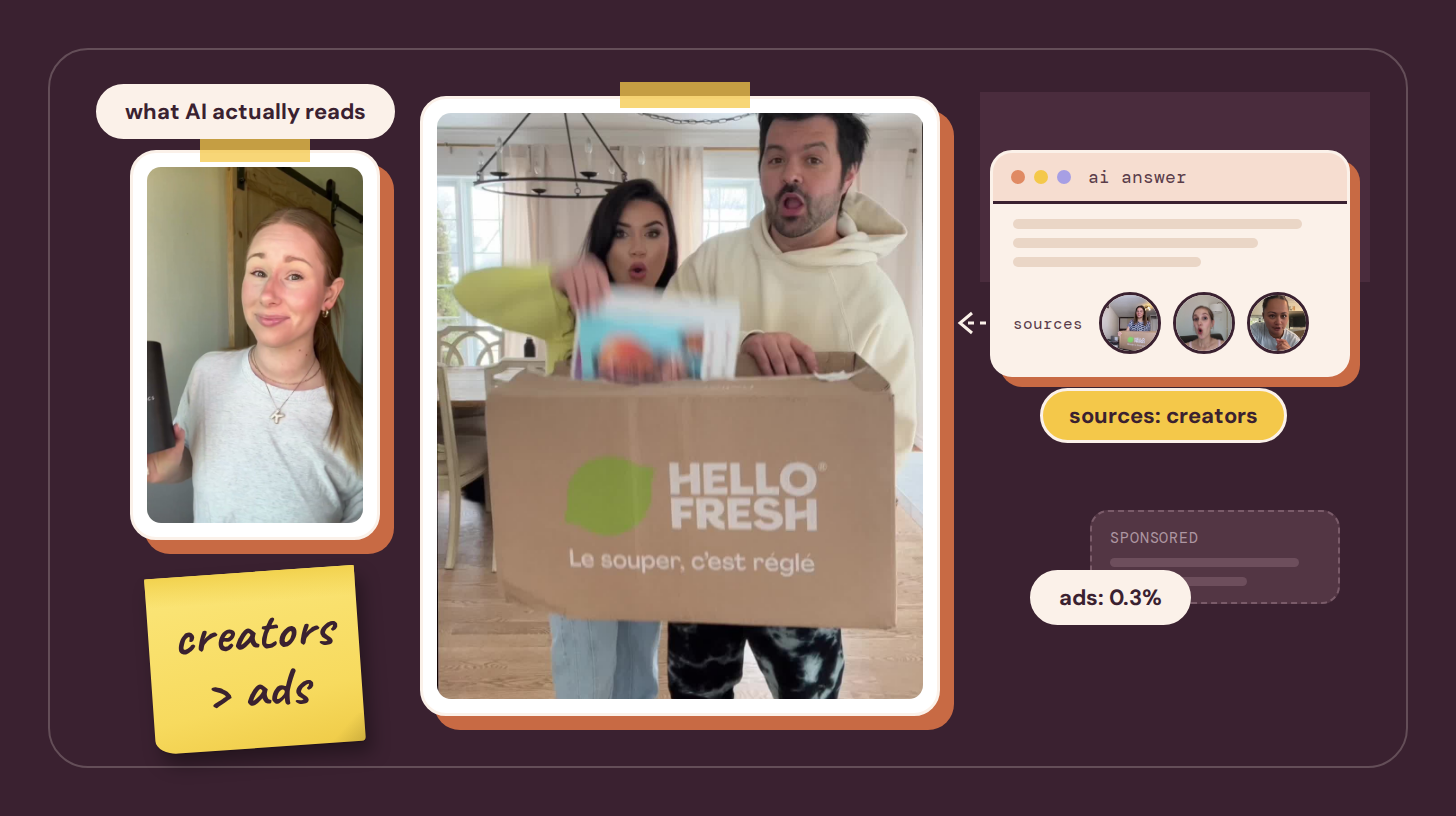
Ok, I have to talk about a number I saw this week because it's been living in my head rent-free.
84% of what AI tools cite comes from earned media. Reviews, articles, YouTube videos, newsletters, people talking about you. Paid placements? 0.3%.
Zero point three.
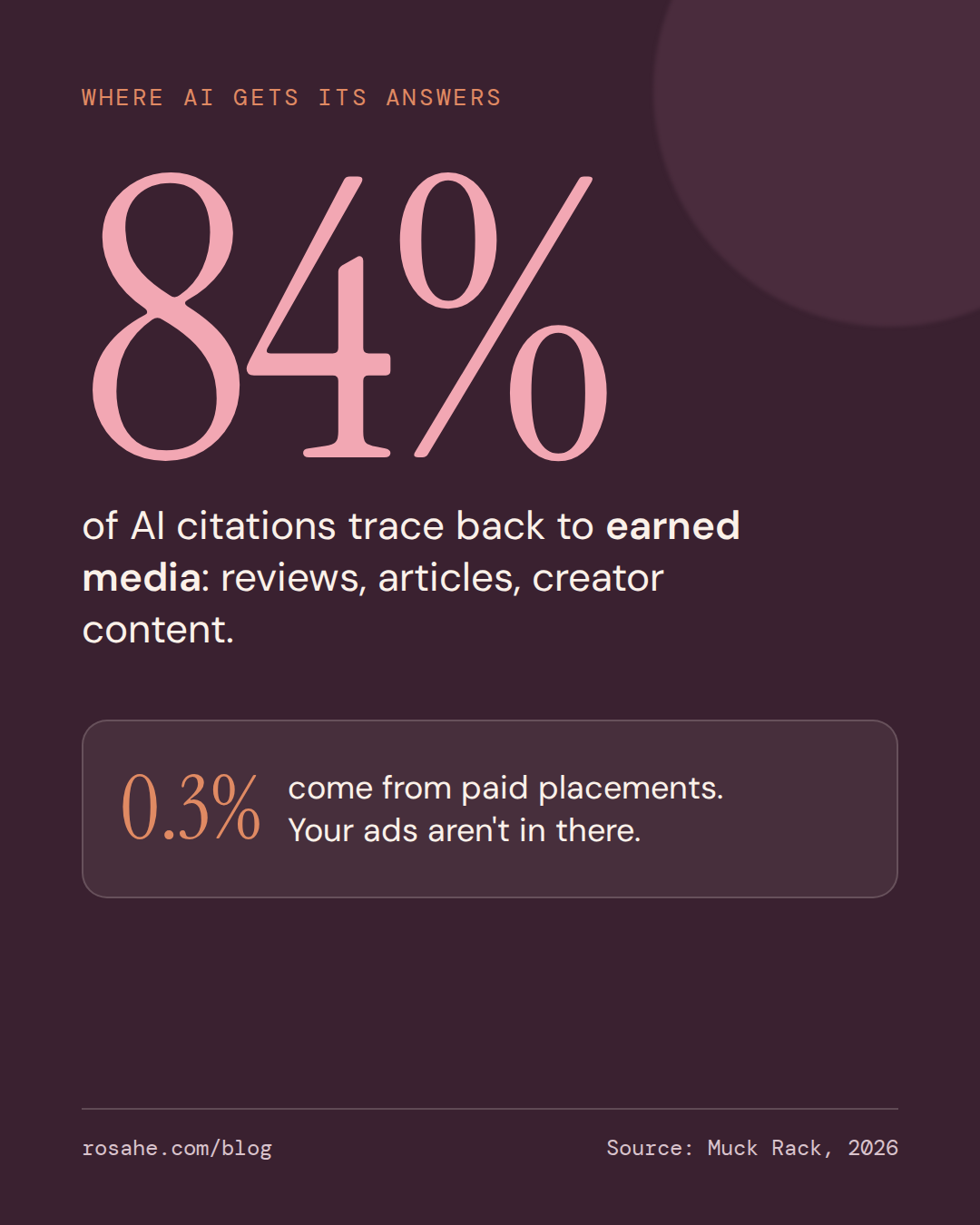 Screenshot this one for your next budget meeting (source: Muck Rack, What Is AI Reading?, 25 million+ links analyzed)
So when someone asks ChatGPT "what's a good skincare brand for sensitive skin?" or "which email tool should my small business use?", the answer is built from what other people have written and said about those brands. Not from the Google Ads you're running next to the search results.
And honestly? I think a lot of us kind of knew this. It just hadn't been measured.
What the studies actually said
There were two, and they back each other up nicely:
- Muck Rack analyzed more than 25 million links that ChatGPT, Claude and Gemini cite. That's the 84% vs 0.3% number above.
- Ahrefs looked at 75,000 brands and checked what lines up with showing up in AI answers. YouTube mentions scored 0.737 (that's a strong link). Backlinks, the thing SEO people have obsessed over for about 20 years, scored 0.218 😅
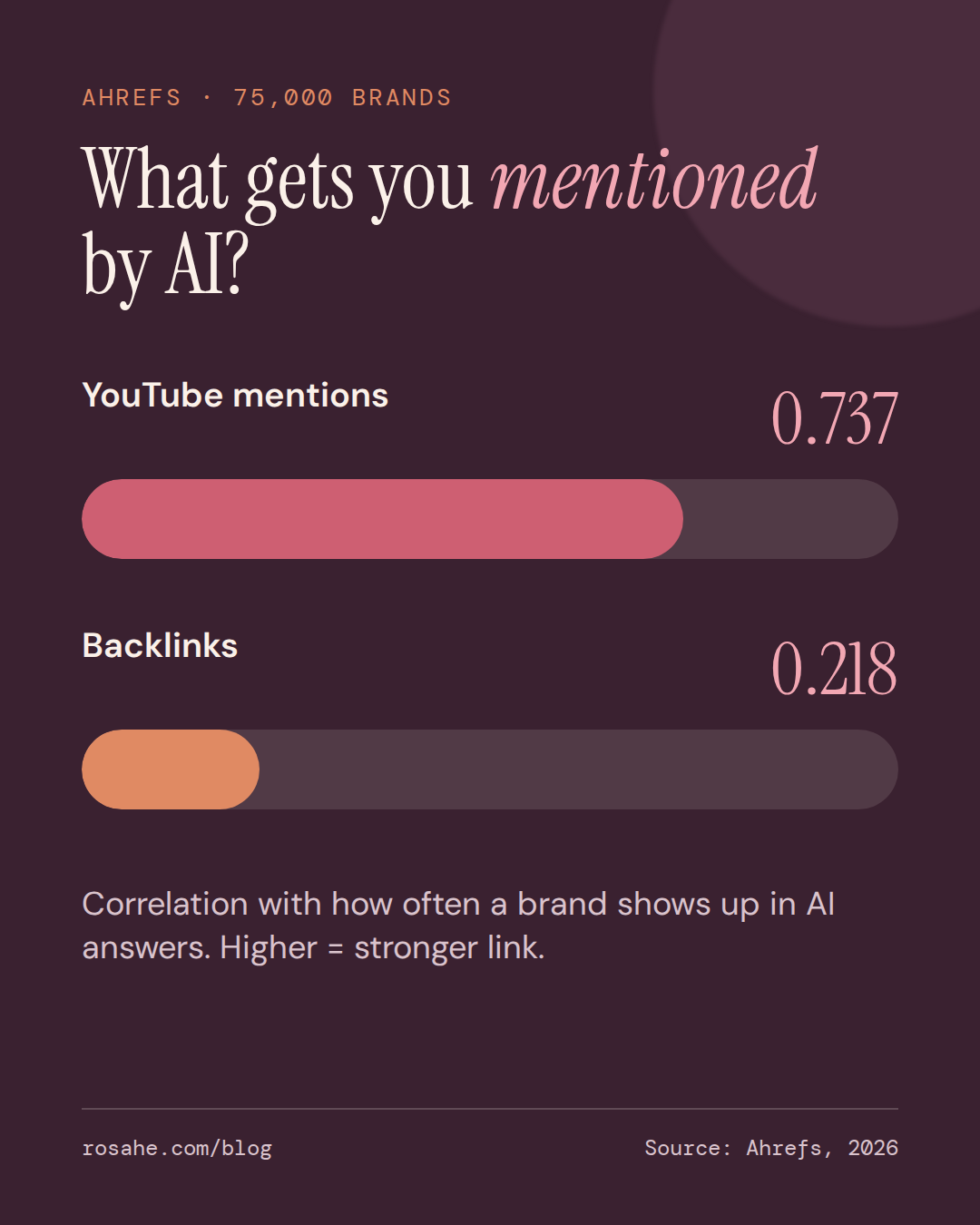 Not saying backlinks are dead. Just saying the SEO bros might want to sit down for this one (source: Ahrefs)
Then this table from New Engen filled in the rest for me. It's from PartnerCentric's shopper research, and it's the bit that made it all click:
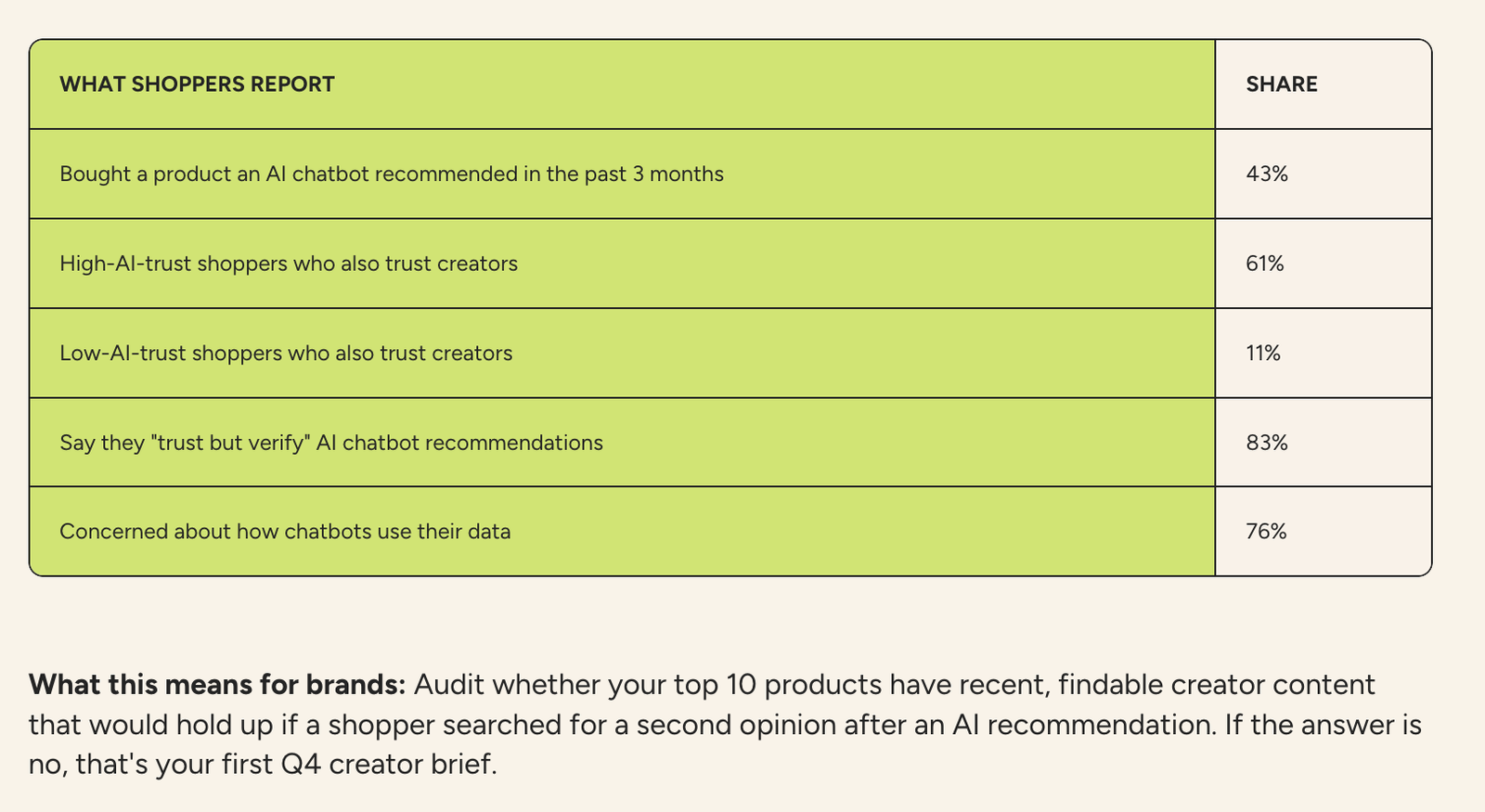 83% "trust but verify" what a chatbot tells them. And where do they go to verify? Creators. (Data: PartnerCentric, via New Engen)
So 43% of shoppers bought something a chatbot recommended in the last three months, and most of them double-check first. The ones who trust AI are also way more likely to trust creators (61% vs 11%). Line it all up and you get a pretty clear path.
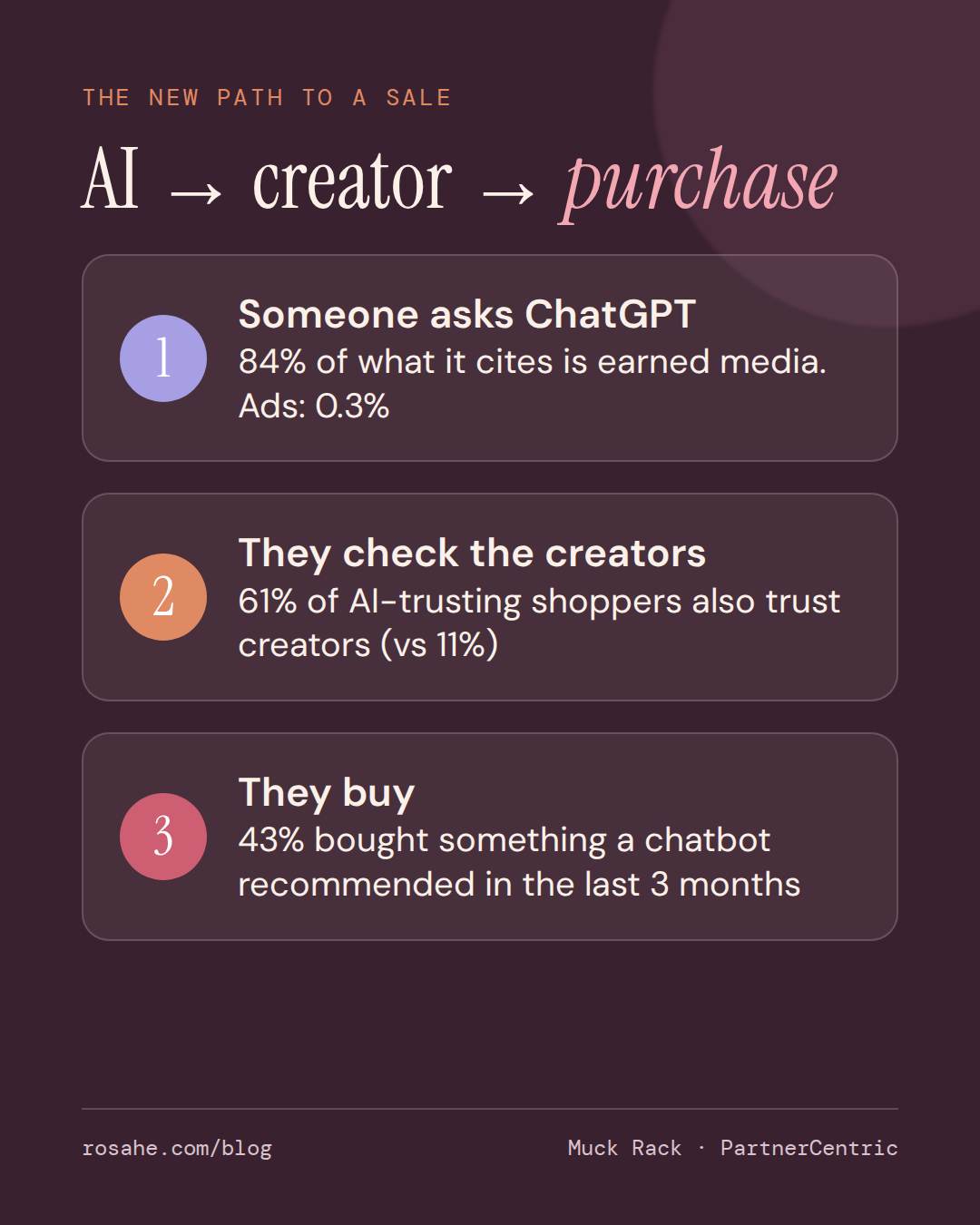 The new path to a sale, in three boxes (sources: Muck Rack, PartnerCentric)
Why this matters if you're small
Creator partnerships have been sitting in the "nice to have" column for a lot of small brands, mostly because the ROI is hard to show. You pay someone, they post, you get some likes, and then you have to explain to yourself (or your boss) what you actually got.
Now there's a second answer. A creator who writes a proper review of your product, or makes a YouTube video about it, is putting something on the internet that sticks around for years. AI tools read it. They cite it. A sponsored Instagram post is gone from people's feeds in two days.
Both cost you money, but only the review is still doing anything for you next year.
And the timing is good, because YouTube just made this easier. At Made on YouTube last week they announced affiliate campaigns, where brands can offer creators incentives like exclusive commission rates or bonuses for making content about specific products. They're also expanding Creator Partnerships to 20 countries so brands can actually find creators, instead of waiting to be discovered or cold emailing people and hoping. And with affiliate, the creator earns a commission rather than a big upfront fee, which is a lot kinder to a small budget.
 Straight from the source. The shopping and affiliate bits are in YouTube's creator announcement (image: YouTube Official Blog)
I'm not telling you to switch off your ads. If they're converting, keep them! Short-term sales still need what they need. I just think creators deserve a proper line in the budget now, not the leftovers.
Where I'd start (no agency needed)
- Find three people already making content about your category (they don't need to have mentioned your brand yet).
- Look at where they post. YouTube and Substack stay findable for years, Instagram mostly doesn't.
- Reach out with something specific about their content. Not a pitch deck. Offer product or a commission.
- In three months, ask ChatGPT about your category and see who it mentions. Then do it again in six.
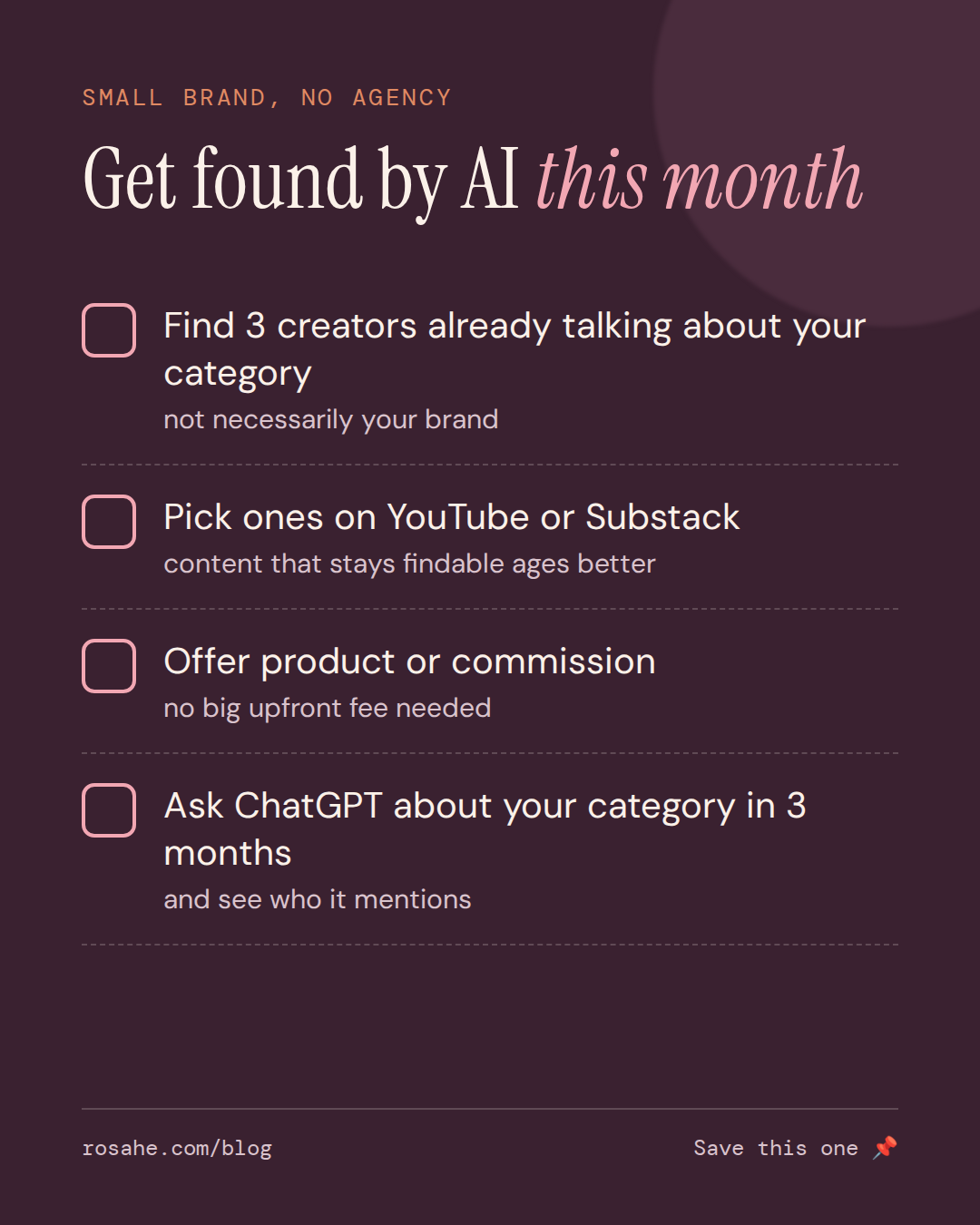 Save this one. Future you will thank you.
It's a slower loop than an ad, I know. But it's also the one that ends up in the answers people are actually reading now.
Now over to you. Are you working with creators yet, or is it still on the someday list? And have you ever asked ChatGPT about your own brand? (Please tell me what it said, I'm very nosy.)
Rosa x
p.s. If you want the methodology, the Muck Rack and Ahrefs studies are both worth a read. And if you know a small brand that's already doing this well, come tell me on LinkedIn!